Teh Tarik to Çay: Tea as a National Ambassador
Picture this: you have just landed in Istanbul after a long flight from Kuala Lumpur International Airport. Your feet are sore, your luggage is heavy, and you step into a small carpet shop in the Grand Bazaar simply to escape the crowd. Before you can even glance at a single rug, a small glass of deep amber liquid is placed in front of you — no menu, no price, no expectation. Just tea. Just warmth. Just welcome.
For Malaysians, this moment feels strangely familiar. We know this feeling. We live it every day at the mamak stall, where a glass of teh tarik is not just a beverage — it is an invitation to slow down, to talk, to belong. In Turkey, that invitation comes in the form of çay (pronounced "chai"), and it is extended to every single person who walks through a door, sits at a table, or pauses long enough to be seen.
What makes Turkish tea culture so extraordinary is not the flavour of the tea itself — though it is bold, rich, and deeply satisfying — but the ritual built around it. The two-tiered teapot. The hourglass-shaped glass. The two sugar cubes on the saucer. The endless refills that signal: there is no hurry here. Together, these small details form one of the world's most intentional and socially meaningful tea traditions.
In this guide, we will explore the full world of Turkish tea culture — how it is brewed, how it is served, where it is enjoyed, and why it matters far beyond the teacup. And along the way, we will draw connections that make it feel not like a foreign tradition, but like a mirror of something Malaysians have always understood.
Just as teh tarik at the mamak represents Malaysian hospitality and community, çay in Turkey carries the same social weight. Both cultures use tea not merely as refreshment, but as a gesture of belonging — a silent way of saying, "You are welcome here."
Average tea consumed per person in Turkey annually — highest in the world
Glasses of çay the average Turk drinks every single day
When large-scale tea cultivation began in the Rize region
Cost of çay when offered in Turkish shops and homes
A Brief History of Turkish Tea
From Silk Road to Your Cup
Mention Turkey and most people instinctively think of kahve — Turkish coffee, dark and thick and served in small cups with a glass of water on the side. For centuries, coffee was indeed the dominant beverage of Ottoman society. Coffeehouses, or kahvehane, were the social centres of cities and towns, where men gathered to play backgammon, discuss politics, and exchange stories.
So how did tea — a relative newcomer — become the national drink of a nation so deeply associated with coffee? The answer lies in economics and soil.
After the collapse of the Ottoman Empire and the founding of the Turkish Republic in 1923 under Mustafa Kemal Atatürk, Turkey found itself economically vulnerable. Coffee had to be imported at great cost, making it increasingly unaffordable for the average citizen. The government turned its attention to the lush, rainy hills of the Rize province, located on the eastern Black Sea coast — a climate remarkably similar to that of the world's great tea-growing regions.
Tea cultivation in Rize expanded dramatically through the 1930s and 1940s, encouraged by government policy and agricultural investment. By the mid-20th century, çay had replaced coffee as the everyday drink of the Turkish people, not just because it was affordable, but because it was theirs — grown on Turkish soil, brewed in Turkish homes, poured from Turkish teapots.
Malaysian Parallel — The Cameron Highlands Connection
For Malaysian readers, the Rize tea region is easy to visualise: think of the Cameron Highlands. Both are high-altitude, mist-covered, cool-climate regions where tea bushes thrive on hillside terraces. Both produce tea that is central to national identity. The next time you visit the BOH plantation in Pahang, imagine the green hills of Rize — and know that the people of both regions share a deep, soil-rooted relationship with their tea.
Today, Turkey is consistently ranked among the world's top five tea producers and holds the top spot globally for tea consumption per capita. The Rize region alone produces around 250,000 tonnes of tea annually. Turkish tea is not exported in vast quantities — most of it is consumed domestically, which tells you everything you need to know about just how seriously Turks take their çay.
It is worth noting, too, that the word çay (pronounced "chai") shares its linguistic root with the Malay word teh and the Hindi word chai, all tracing back to ancient Chinese trade routes. The Silk Road, which connected China to the Middle East, Central Asia, and eventually Europe, passed through the very lands of Anatolia. Malay traders and Arab merchants who sailed the spice routes were part of the same ancient network that moved tea from East to West. In this sense, every glass of Turkish çay carries within it a memory of shared civilisational history.
How Çay is Made
The Double Teapot Method (Çaydanlık)
If there is one thing that sets Turkish tea apart from any other brewing tradition in the world, it is the çaydanlık — the iconic double-stacked teapot that sits atop almost every Turkish stove, in every home, every office, and every tea garden across the country.
The çaydanlık consists of two separate pots, one stacked on top of the other. Understanding how they work together is the key to understanding why Turkish tea tastes the way it does — and why no two glasses need to taste exactly alike.
1. Fill the Bottom Pot with Water
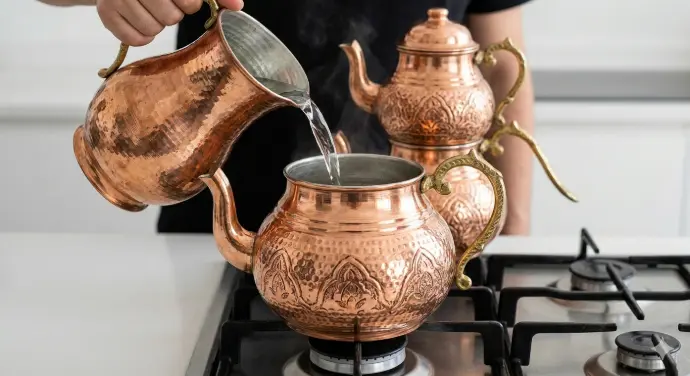
The large lower pot (büyük demlik) is filled with fresh cold water and placed on the heat. This is your water reservoir, and it will come to a full rolling boil. In Rize, locals insist on using the mineral-rich mountain water of the region for the best flavour.
2. Add Tea Leaves to the Top Pot
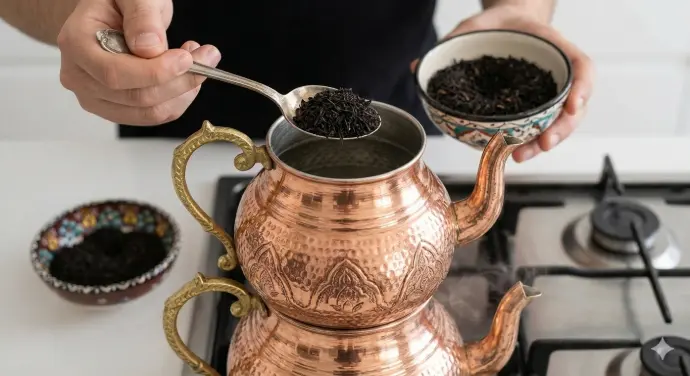
The smaller upper pot (küçük demlik) is filled with loose-leaf black tea — typically a bold, tannic Turkish tea from Rize. A generous amount is used: Turkish tea is never weak. The standard measure is roughly two to three teaspoons per cup intended.
3. Steam and Steep — The Two-Stage Infusion
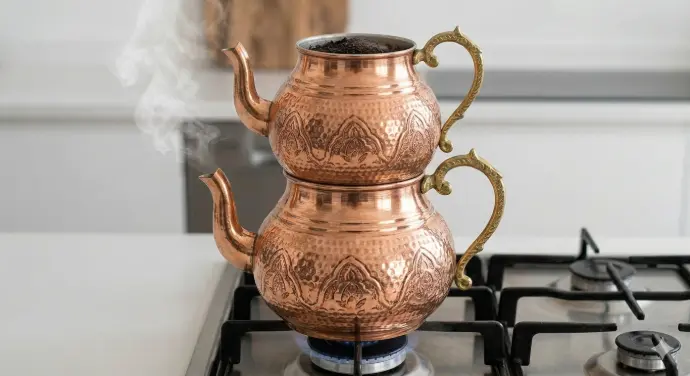
Once the water in the lower pot boils, some of it is poured over the dry tea leaves in the upper pot to begin steeping. The upper pot then sits on top of the lower pot and steams gently — never boiling — for 15 to 20 minutes. This slow, patient steep produces an intensely concentrated tea extract called demleme.
4. Dilute to Personal Preference — Koyu or Açık
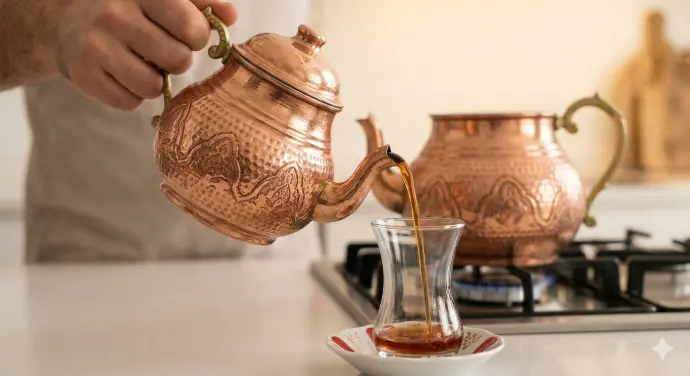
When serving, the host pours the dark concentrate from the upper pot first, then dilutes it with hot water from the lower pot. The ratio is entirely at the drinker's discretion: koyu (dark/strong) means more concentrate, less water; açık (light/open) means the reverse. This personalisation is central to Turkish tea culture — it respects individual taste without question.
5. Serve Immediately — Always Hot
Turkish tea is served the moment it is poured. It is never microwaved, never reheated, and never left to sit. The goal is a glass so hot you can barely hold it — which is precisely why the tulip-shaped glass has no handle, a feature we will explore in the next section.
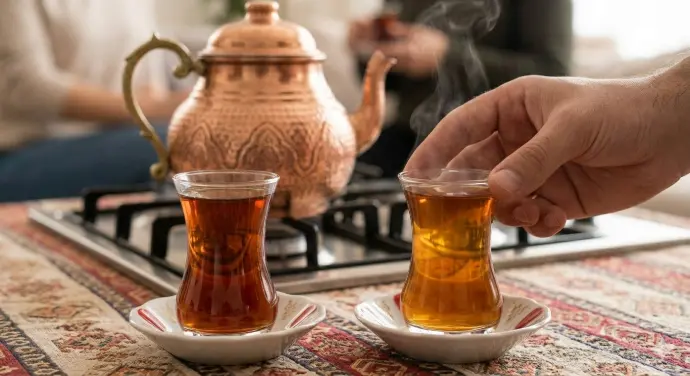
The parallel to Malaysian tea is immediate and intuitive. When Malaysians order teh tarik at the mamak, they specify: kurang manis (less sweet), pekat (thick/strong), or cair (diluted/light). In Turkey, the same philosophy of personalised tea exists — the difference is that control is given to the drinker at the time of service, not at the time of ordering. It is a subtle but meaningful distinction that speaks to Turkish hospitality: the guest decides, always.
How Çay is Served
The Tulip Glass, Sugar Cube & Etiquette
Walk into any tea house in Istanbul, any living room in Ankara, or any fishing village along the Aegean coast, and the serving of çay will follow a ritual so consistent, so precise, it feels almost ceremonial. And in many ways, it is.
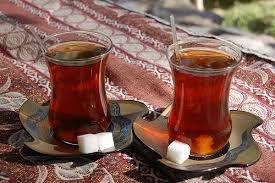
The centrepiece of this ritual is the ince belli glass — the slender-waisted, tulip-shaped glass that has become one of the most recognisable symbols of Turkey. The name ince belli literally means "thin-waisted" or "slender-waisted" in Turkish, and the design is not merely aesthetic. The narrowing at the middle allows you to hold the glass at the rim — pinching the very top between your thumb and forefinger — without burning yourself on the hot tea below. It is ergonomic elegance: form and function inseparable.
"The tulip glass is Turkey's way of saying: we made beauty useful, and usefulness beautiful."— A Turkish tea artisan in Rize
The glass is always placed on a small saucer — typically white porcelain with a gold rim — and accompanied by two sugar cubes on the side. This is important: Turkish çay is never pre-sweetened. The sugar is placed beside the glass, not inside it, because the tradition respects the integrity of the tea's natural flavour. You choose whether to sweeten it, and how much.
For Malaysian visitors accustomed to teh tarik arriving already sweetened with condensed milk, this can feel surprising at first. But it quickly reveals itself as a deeply respectful act — the tea says to you, I am complete as I am. But I will be whatever you need me to be.
There is also a traditional way of consuming sugar with Turkish tea known as ısırma usulü, meaning "biting method." In this practice — more common among older generations and in rural areas — the sugar cube is held between the front teeth and the tea is sipped through it, so the sweetness dissolves gradually with each sip rather than being stirred into the liquid. It is a meditative, tactile way of drinking that slows the experience down even further.
Tip for Malaysian Travellers
When offered çay in a Turkish shop or home, always accept it. Refusing a glass of tea — especially from a shopkeeper or host — can be interpreted as a mild social rejection. You are not obliged to buy anything or commit to anything. The tea is simply a gesture of goodwill. Accept it, hold the glass by the rim, and sip slowly. You will be surprised how much a small glass of tea can open a door.
Refills in Turkish tea culture are not asked for — they are automatic. The moment your glass is two-thirds empty, it will be whisked away and returned full. This is not intrusive service. It is a cultural statement: you are welcome to stay as long as you like. The tea keeps coming until you place your saucer on top of your glass — the universal signal in Turkey that you have had enough. No words needed.
Where Çay is Drunk
Tea Gardens, Bazaars & Living Rooms
One of the most beautiful things about Turkish tea culture is that it does not live in a single, exclusive setting. It is not reserved for fancy hotels or tourist destinations. It exists everywhere — in the humblest fishing village and in the grandest city — and it looks almost identical in both.
But there are certain places where the experience of drinking çay rises to something close to transcendent.

Çay Bahçesi on the Bosphorus, Istanbul
Tea gardens (çay bahçesi) lining the Bosphorus strait offer open-air seating, endless glasses of çay, and views of the water dividing Europe and Asia. These are not cafés in the Western sense — there is no wifi culture here. People come to sit, to watch, and to talk for hours.
The Grand Bazaar, Istanbul
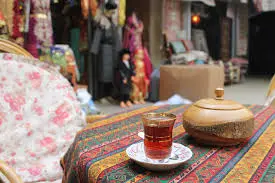
Inside the labyrinthine corridors of the Grand Bazaar — the world's oldest covered market — çay flows constantly. Shopkeepers offer it freely while you browse carpets, ceramics, and spices. It is part of the negotiation ritual: the tea softens the air and establishes goodwill before any money changes hands.
Rize Province — The Tea Heartland
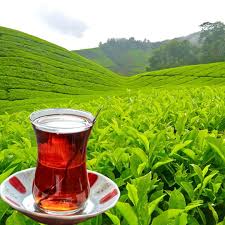
For the ultimate çay experience, visit Rize itself. The hillside tea plantations, draped in morning mist, are reminiscent of Cameron Highlands. Local tea houses here serve çay so fresh the leaves were picked that morning — a flavour unlike anything you will find in a city.
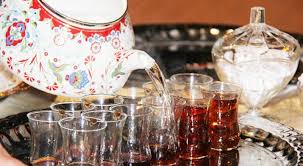
A Turkish Home
The most authentic çay experience of all. If you are lucky enough to be invited into a Turkish home, the çaydanlık will already be on the stove before you have taken your shoes off. Home tea is personal, generous, and unhurried. This is where you will understand what çay truly means to Turkish people.
For Malaysian travellers, the cultural parallel is immediately recognisable. In Malaysia, the equivalent of the çay bahçesi is the mamak — open 24 hours, never empty, always loud with the sound of conversation. In both cultures, the drink is merely the anchor. The real purpose is the gathering.
Turkish hospitality — known as misafirpeverlik — places enormous social value on welcoming guests. In Malay culture, the proverb tetamu adalah raja (guests are kings) reflects a nearly identical value. Both cultures understand that the act of offering tea is not about the tea at all. It is about making another person feel seen, valued, and unhurried. In a fast world, this is revolutionary.
Where to Go in Istanbul for Authentic Çay
Pierre Loti Tea Garden in the Eyüp district offers panoramic views of the Golden Horn. Çorlulu Ali Pasha Medresesi in Beyazıt is a 17th-century courtyard transformed into a relaxed outdoor çay garden. Eminönü waterfront near the Galata Bridge is lined with casual tea sellers serving fishermen and locals alike.
Why Çay Matters
Slow Living & Mental Well-being
To understand why çay matters, you must first let go of the idea that it is a drink. It is not. Or rather — it is a drink the way music is just sound, or the way a hug is just touch. Technically accurate. Profoundly incomplete.
Turkish tea culture is one of the world's most sophisticated expressions of what sociologists call slow living — the conscious, deliberate choice to give time its full value. In Turkey, the çaydanlık is never rushed. You cannot microwave a glass of çay without destroying its meaning. The 15-to-20-minute brewing process is not an inconvenience to be optimised away. It is the point.
When a Turk puts the çaydanlık on the stove, they are making a statement: this moment is worth waiting for. When they refill your glass without being asked, they are saying: you do not need to leave yet. When they sit across from you with their own glass, they are offering the most valuable thing they have — their time and their attention.
"In Turkey, you do not drink tea alone if you can help it. Drinking alone means something is missing."— Turkish proverb (loosely translated)
For Malaysian readers, this resonates deeply — and urgently. Malaysia's urban centres, particularly Kuala Lumpur and the Klang Valley, are experiencing the same modern crisis that has swept through cities worldwide: burnout, disconnection, and the erosion of stillness. The hustle culture — the glorification of busyness, the anxiety of productivity, the endless scrolling — has quietly dismantled many of the communal rituals that once gave Malaysians their social anchor.
The mamak stall used to be that anchor. And for many Malaysians, it still is. But increasingly, the time spent there is punctuated by phone screens rather than eye contact. The tea is still there. But the ritual is fading.
Turkish çay culture offers a powerful reminder of what we lose when we rush. Research in positive psychology consistently demonstrates that shared rituals — even simple ones like brewing and drinking tea together — strengthen social bonds, reduce cortisol levels, and increase feelings of belonging and psychological safety. The act of making tea for someone, not just serving it but tending to it across 20 minutes, is itself an act of care that registers in the nervous system of the recipient.
In the growing wellness movement across Malaysia — where more Malaysians are discovering mindfulness, forest bathing, digital detoxes, and slow travel — Turkish tea culture represents something worth importing. Not the tea itself (though that too, as we discuss below), but the philosophy behind it: that connection requires time, and time requires intention.
Bringing Çay Culture Home to Malaysia
You do not need to fly to Istanbul to experience Turkish tea culture. With a little intention and the right equipment, you can bring the spirit of the çaydanlık into your Malaysian kitchen — and in doing so, create your own version of the slow, connected ritual that millions of Turks practice every single day.
Here is how to get started:
- Get Turkish Tea Leaves — Available in Malaysia
- Authentic Rize çayı
(Rize black tea) — the same variety used in Turkey — is available on
Shopee Malaysia and Lazada Malaysia
Search for "Turkish black tea loose leaf" or "Çaykur Rize tea." Prices range from RM15 to RM35 per 500g pack. Some specialty grocery stores in Bangsar, Publika, and Damansara also carry imported Turkish tea brands.
2. Get a Çaydanlık (Double Teapot)
A stainless steel or glass çaydanlık can also be found on Shopee and Lazada, typically priced between RM40 and RM90 depending on size and material. Alternatively, you can approximate the method using two separate saucepans — one large, one small — though the dedicated double teapot produces noticeably better results.
3. Source Tulip Glasses
Turkish tulip glasses (ince belli bardak) are the most distinctive part of the serving experience. Sets of six are available online for around RM25 to RM50. Serving çay in these glasses — rather than a mug — transforms the entire experience. The visual clarity of the amber tea against the glass, the warmth against your fingertips: it changes how you drink.
4. Pair With Malaysian Snacks — A Cultural Fusion
Turkish çay is traditionally served with simit (sesame bread rings), börek (pastry), or simple sugar cubes. But there is no reason it cannot be paired with Malaysian favourites. Try çay with kuih bahulu, biskut mazola, kuih kapit, or even a warm slice of kek lapis Sarawak. The bold, tannic tea cuts through the sweetness of Malaysian kuih beautifully — a natural culinary pairing that bridges two cultures.
5. Adopt the Ritual, Not Just the Recipe
The most important ingredient in Turkish tea culture is not the tea. It is the intention. Put the çaydanlık on the stove. Sit down. Invite someone to wait with you. Leave your phone on the counter. When the tea is ready — after 20 full, unhurried minutes — pour it slowly, pass the glass with both hands, and be present. That is the whole of it. That is çay.
Turkish tea culture and Malaysian tea culture, at their core, are the same thing: an invitation. An invitation to slow down, to be present, to sit across from another human being and remember what we are here for. Whether it arrives in a tulip glass on the Bosphorus or a tall glass of frothy teh tarik at the mamak on Jalan Ipoh, the message is identical:
Great stories are for everyone even when only written for just one person. If you try to write with a wide, general audience in mind, your story will sound fake and lack emotion. No one will be interested. Write for one person. If it’s genuine for the one, it’s genuine for the rest.
"Whether it's teh tarik in Kuala Lumpur or çay on the Bosphorus, tea has always been humanity's way of saying — sit down, you are welcome here."
The next time you travel to Turkey — or the next time you brew a pot at home — carry that thought with you. And offer someone a glass.
Frequently Asked Questions (FAQ)
Turkish çay is a pure black tea — bold, slightly tannic, with a bright amber colour and no milk or sugar added by default. It is more astringent than Malaysian tea, which is typically sweetened and enriched with evaporated or condensed milk. Çay is closer in flavour to a very strong English breakfast tea, but with a distinctive earthiness from the Rize region soil. Many Malaysians find it refreshingly clean-tasting after the rich sweetness of teh tarik.
Yes. Authentic Turkish loose-leaf black tea — particularly the popular Çaykur brand from Rize — is available on Shopee Malaysia and Lazada. Some specialty grocery stores in Kuala Lumpur (Bangsar, Damansara, Publika) and Middle Eastern grocery shops in Masjid India also carry Turkish tea. Tulip glasses and double teapots are also available online.
Not necessarily rude, but it can be mildly awkward — especially in a shopkeeper's setting or a private home. In Turkish culture, offering tea is a sincere gesture of hospitality, and accepting it is a social courtesy. If you cannot drink tea for health reasons, a polite explanation is always well-received. However, declining without reason may signal disinterest or discomfort to your host.
The tulip-shaped glass (ince belli) is designed so that you hold it at the narrow rim — not the body — to avoid burning your fingers on the hot tea. The shape also keeps the tea hot longer while the narrow waist concentrates the aroma. The transparency of the glass allows you and your host to see the exact colour of the brew, which is used to gauge strength before drinking.
The average Turkish person drinks between 4 and 10 glasses of çay per day, making Turkey the highest per-capita tea-consuming country in the world. Tea is drunk at breakfast, mid-morning, after lunch, in the afternoon, and often after dinner. It accompanies almost every social interaction — business meetings, family visits, market negotiations, and casual conversations.
You can, but it is culturally unusual in Turkey. Milk tea (sütlü çay) exists but is rare and generally seen as a non-traditional way of drinking çay. Most Turks would find adding milk to a freshly brewed glass of çay a little surprising. If you are visiting Turkey and want to experience the culture authentically, try drinking it the traditional way — black, with a sugar cube on the side — at least for the first few glasses.
Start writing here...